Hi, I’m Bandana! (Bun-the-nah)
I'm a lead design strategist working in Canada and the United States. I use human-centered design methods to build services, products and experiences real people truly use and enjoy.
“What truly sets Bandana apart is her exceptional ability to work through ambiguity.” Amanda Di Dio, Optimistic Design.
-
Building with and for our customers, clients, patients, constituents, community members is how we know that our product or service is needed, and wanted. People deserve to have agency in the decisions that affect their lives. Building the time and space for expressive practices ensures that the real people we serve, and their experiences, are included in every step of our collective decision making.
-
Projecting a map of a shared future requires us to learn about what’s happened to date, how those experiences made us feel, and how those feelings influenced our decisions. Using creative methods we can identify those touchpoints and explore how they change us.
-
The future is not a single line being propelled by a single force. We are collectively building the future, with our clients, with our teams, and with our users. Using techniques from television and media production, we can craft compelling narratives to test our assumptions and prototypes and get true feedback.
-
In an AI oriented and post-platform era of work and play, nurturing meaningful connections will be increasingly important. Cultivating ecosystems where your project or organization will not only be seen, but more importantly create symbiotic relationships with others in the landscape will be key to growth.
Projects & Testimonials
I lead research and prototyping for services, strategies and digital products for large complex projects across industries, with special focus on large organizations connecting with the marginalized people they serve.
“…excellent, clear, consistent communication probably being the most outstanding element she brought to the table. We always knew where we stood at any moment, what was our “next step”, and it seemed to me she related to all involved with equal professionalism and generosity.” David Ellingsen, Landscape Photographer, hcma Tilt, Artist in Residence; Victoria 2021.
"Bandana’s thoughtful research and deep listening played an invaluable role in helping to shape the UX and design experience for the users we were building for. She brought keen insights and a pleasant, calming presence to a complex, multi-stakeholder challenge. We look forward to having the opportunity to work with her again!" Rob Monroe, 3rd Edge.
-
What if the people we are trying to design for, we simply can’t see? This was a unique challenge when I led the design discovery research for Optimistic Design in Seattle on the Entrepreneurial Support Hub digital product design. (The process is detailed on Optimistic’s website.)
-
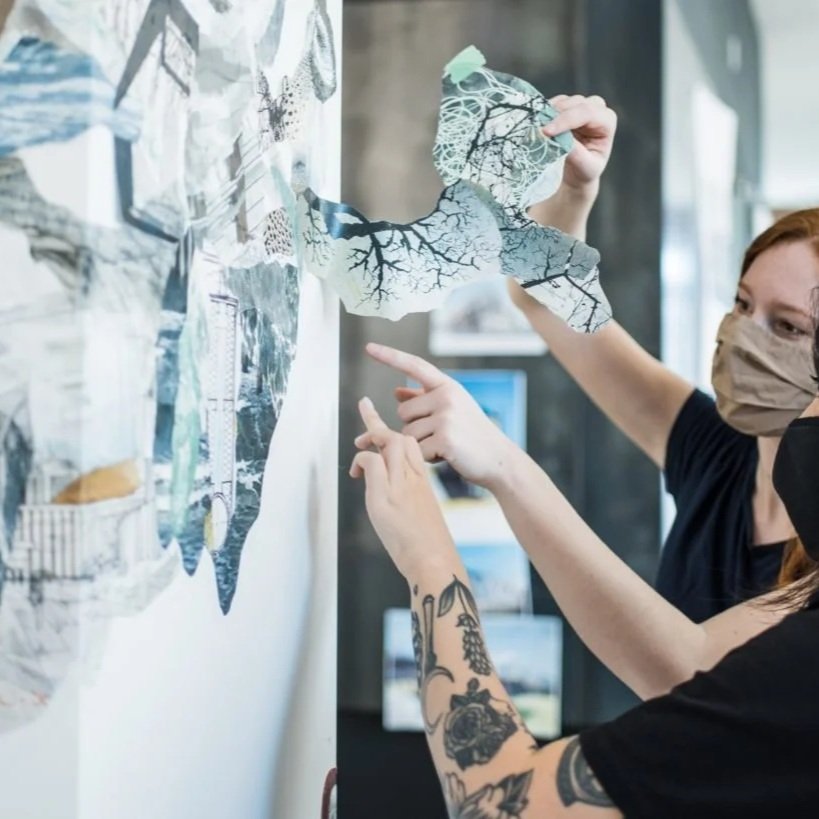
hcma is an interdisciplinary design firm based in Vancouver. They house ‘Tilt,’ a curiosity lab that asks provocative questions, collaborates with community and explores new ways of being together. Learn about leading Tilt through Covid, and how design research created experience pillars for a beloved lab.
-
Based in Seatle, Substantial (now Optimistic Design) is a human-centered, equity based design and insights studio. Learn more about my approach leading design strategy and design research for two large, multi-stakeholder US client projects.
-
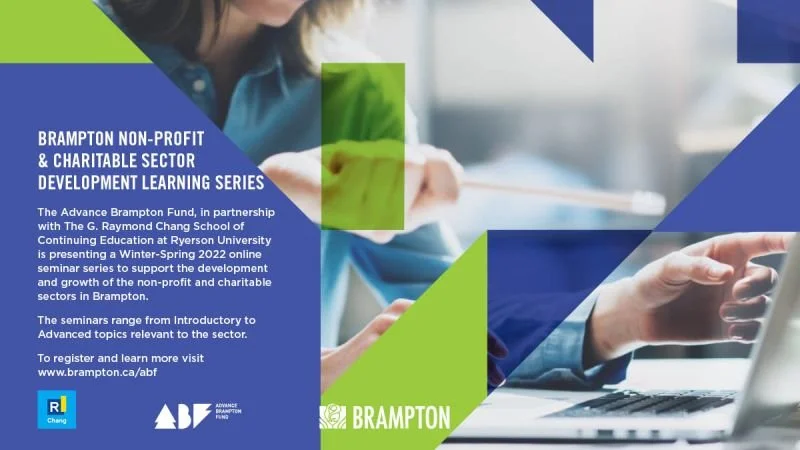
Brampton is one of the fastest growing cities in Canada, and their non-profit sector supports hundreds of thousands of residents each year. Learn more about the design research involving both elected officials and community members, including the rebrand and relaunch of their largest community granting program in under 18 months.
-
I play distorted guitars and wanted to learn about the experiences of other artists in scenes that influenced my own sound.
This was an independent artist driven project to document experiences of punk musicians and community members in Toronto, Los Angeles and Mumbai.
Listen to the audio interviews with photography, where interviews touched on aggression, gender and tradition in these different interconnected scenes.
Read the Vice/Noisey article highlighting featured artist Urvah Khan's experiences as a member of a punk diaspora.
-
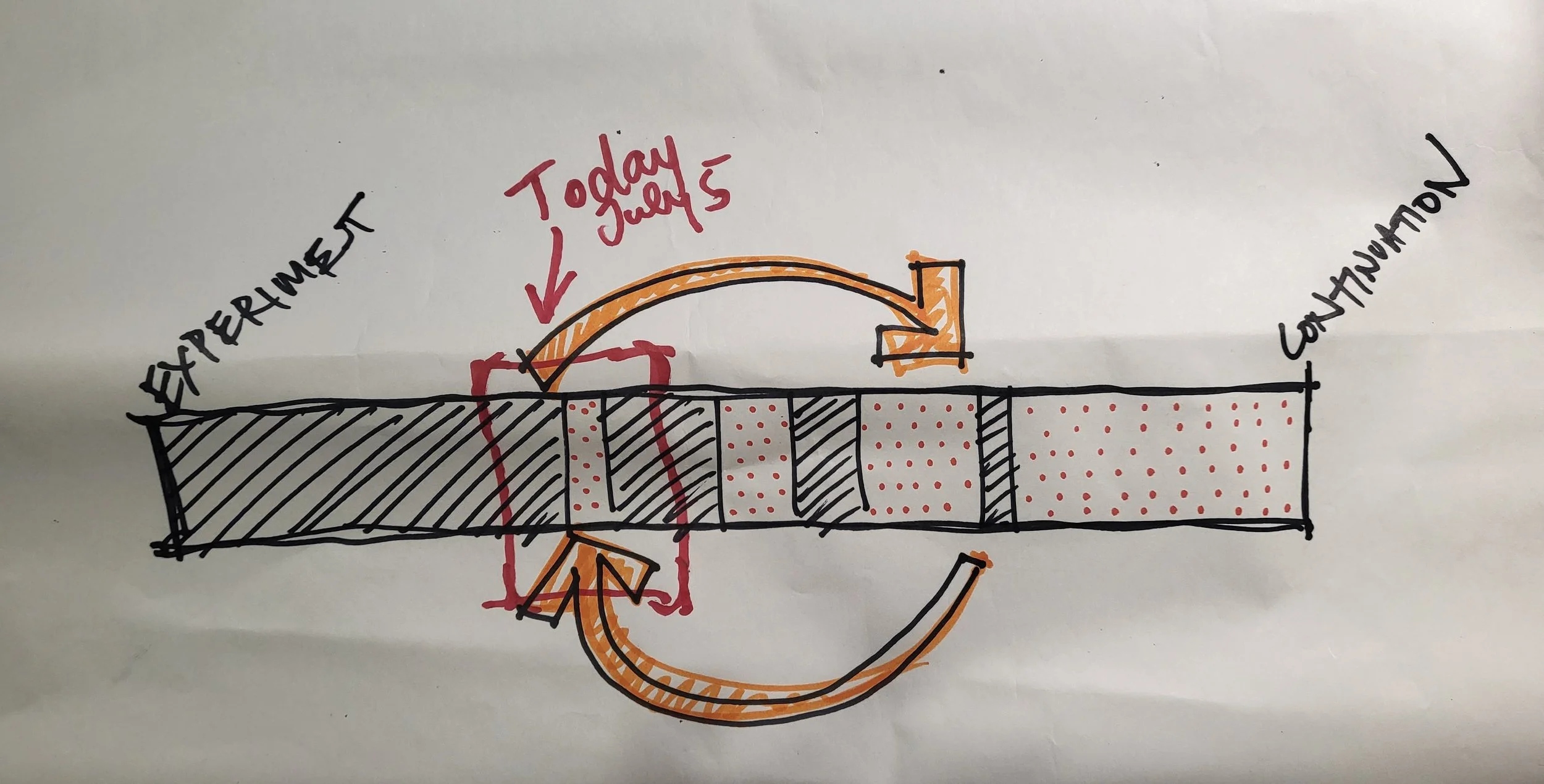
POPS are ‘privately owned, public spaces.’ plazaPOPS works to create temporary installations in suburban parking lots/underused spaces for placemaking. Learn about the co-created space for the plazaPOPS board to envision their future moving from being experimental collective to becoming an established organization.
Services
I’d love to learn more about what you’re working on! Do you have questions about Design Thinking, or Prototyping or moving from Pilot to Implementation?
I’m happy to connect!
-
Human-centered design research makes use of people's actual experiences. We can learn about these experiences through creative methods such as workshops, facilitation methods, qualitative interviews and prototyping as well as traditional quantitative methods such as surveying and analysis.
These methods help us look at an issue, challenge or opportunity from many different points of view. The synthesis of which provides strategic direction, opportunities to build new prototypes, and move towards new ways of collectively acting towards a solution.
-
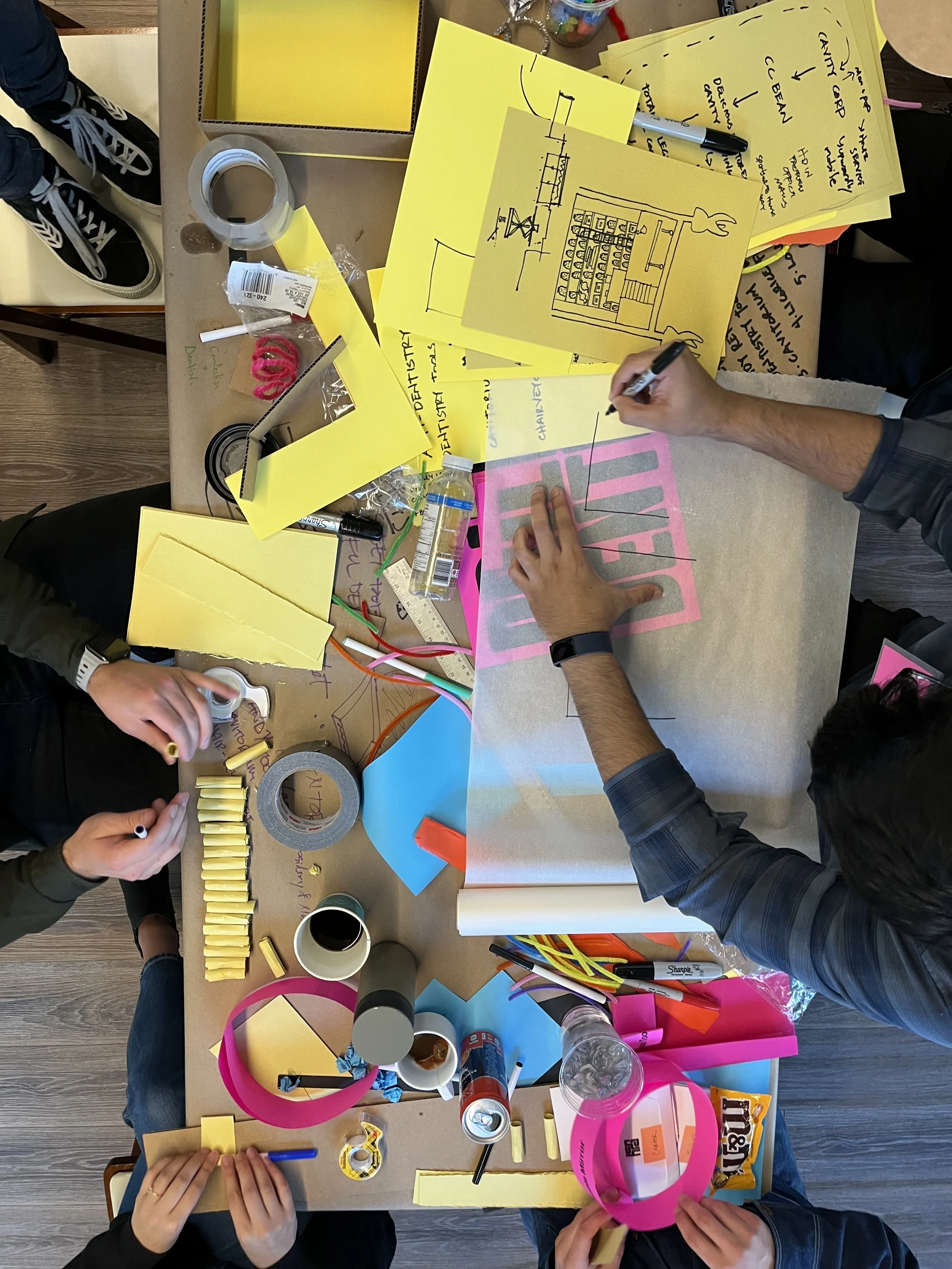
Designing experiences for board members, c-suite, staff, clients, customers and community members can be challenging -especially when designing workshops to meet all these different types of needs.
Workshops may only be a few hours or a few days long, but workshops generate ideas and have impacts that will be felt long after the workshop is complete.
Special consideration is given when embedding expressive and creative practices into different spaces and audiences, to ensure that content, delivery format and impact are participant appropriate.
-
Sometimes it's helpful to have an outside set of eyes on your project plans when integrating design thinking or creative practices into your research, strategy that is now moving into the prototyping stages, where real people start to interact with your project.
Do you or your clients need a bit of perspective on the plans, processes or potential outcomes of your work?
TCO can act as a sounding board and help you work through process and evaluation of your plans, OR directly support the production of pilots and prototyping.
-
Human-centered design includes methods and approaches to research that center the people that a service, product or experience is going to effect.
This can include traditional research methods, such as interviewing, surveying and reviewing secondary data. However, it also includes methods such as rapid prototyping of ideas to receive feedback from users prior to deployment.
Creating a HCD practice includes, skills, tools and mindset. Traditional research skills are enhanced with rapid prototyping tools, and an openness towards iteration, asking questions, and using discernment to create new intellectual property.
If your business has not yet had a chance to incorporate HCD principles into your work, we can create a plan to start, share and sustain your HCD practice that is specific to your needs.
-
Creative Research methods incorporate different creative mediums (especially in workshop settings) to create deeper and more meaningful research experiences for participants, and richer insights for organizations.
This can be achieved through either embedding different methods into your current design research, community engagement, or alternatively, by engaging artists directly into phases of your design project process.
Artists, and creative professionals can be embedded into different types of teams or projects to bring new methods, experiences or perspectives to your work and enhance user impact.
If you're currently working with artists, or considering it, The Cultivation Of can support you with providing advisory, project/program management with best practices for working with artists and creative professionals.